
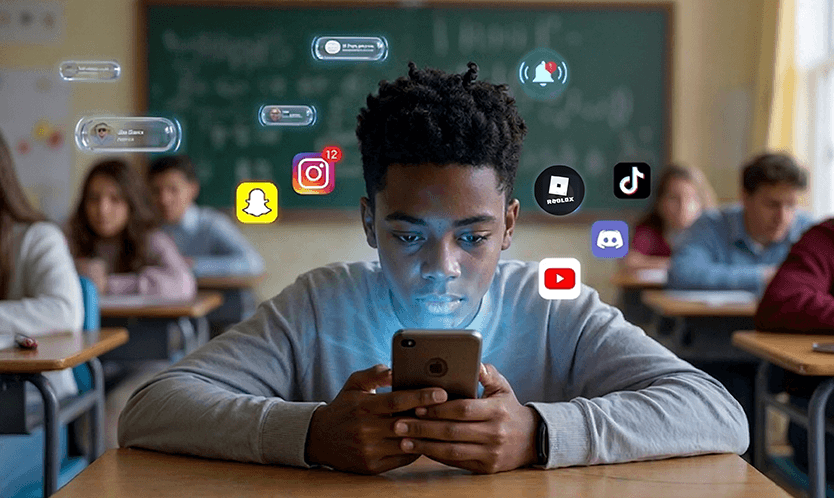
Here's the paradox about social media and teenagers: 95% of teens use it, with 48% believing it's bad for their peers, yet 74% say it makes them feel more connected to friends. Articles everywhere claim social media destroys teen mental health. Some of that's true. Yes, teens who spend more than 3 hours daily on social platforms have double the risk of experiencing anxiety and depression. Yes, 46% of girls feel worse about body image. But here's what research that listened to teens found: social media and mental health isn't a simple toxin story. It's complicated. Girls and boys experience it differently. LGBTQ+ teens often find community there. The real question isn't whether social media is bad, but how you use it and why it affects teen mental health the way it does.
Your brain releases dopamine when you get likes, comments, or shares. The same chemical that floods your system when you eat chocolate or win money. A region called the nucleus accumbens lights up, part of your brain's reward circuitry.
Social media platforms engineered this response on purpose. Variable reward systems work like a slot machine since you never know if your post will get 10 likes or 200. This uncertainty creates a dopamine-driven feedback loop that keeps you checking your phone again and again.
The anticipation of social approval triggers these reward pathways. Your brain prunes neurons to make the reward pathway faster over time and reinforces the habit. Like drugs or gambling, social media activates the same neural networks as substance addiction.
Your brain undergoes a highly sensitive period of development between ages 10 and 19. Your prefrontal cortex, which controls impulse control and emotional regulation, isn't fully developed yet. So you're extra vulnerable to the dopamine hits social media delivers.
Teens who check social media more than 15 times daily show fundamentally different brain development than those who check less. Researchers tracked 169 middle schoolers for three years and found that habitual checkers became hypersensitive to peer feedback. Their brains showed increased activation in regions controlling motivation and emotion.
Teens who didn't check constantly showed decreasing sensitivity to social cues over time. Their brains developed better cognitive control and impulse resistance. By age 12, if you're already glued to your phone, your brain is being shaped differently.
Here's why scrolling feels good but leaves you feeling terrible: your brain gets plunged into a dopamine-deficit state the moment you log off. Social media releases unnaturally high levels of dopamine all at once, like heroin or meth. Your brain crashes when that flood stops.
Your brain is also hardwired to notice threats and novelty, which helped humans survive over millions of years. This protective tendency backfires online. The more time you spend consuming negative content, the more distressed you feel. Once negativity arises, it works like a lens and makes you pay more attention to posts that justify those bad feelings.
That's doom scrolling. Not curiosity. Biology.
Depression among teens spiked 52% between 2005 and 2017. That timeline matches exactly when social media went from occasional to constant. Teens who spend more than 3 hours daily on social platforms face double the risk of experiencing depression and anxiety symptoms. Most teens average 3.5 hours daily.
Here's the part that gets overlooked: 40% of depressed and suicidal youth report problematic social media use, defined as feeling upset or disappointed when not scrolling. Their symptoms, suicidal thoughts, and overall well-being measured far worse than peers who could log off without distress.
46% of teens aged 13-17 said social media makes them feel worse when asked about body image. More than 70% of users won't post pictures without editing them first. Instagram shows up in surveys as the platform most likely to trigger anxiety, depression, and body image worries.
Filters and editing apps often use beauty standards modeled on white features and reinforce racist views of attractiveness. Girls bombarded with perfect images from friends, celebrities, and influencers find it hard on their self-confidence when that becomes their baseline for normal.
Sixty percent of adolescents stare at their phones in the last hour before sleep. They get an hour less sleep than peers who don't use phones before bed. Blue light suppresses melatonin production, the hormone that regulates sleep. Scrolling isn't relaxing either. It triggers emotional arousal that makes falling asleep harder.
Forty percent of adolescents in 2015 slept less than seven hours nightly, 58% higher than in 1991. Teens who spent five-plus hours online daily were 50% more likely to sleep insufficiently compared to those spending one hour.
Nearly half of U.S. teens have experienced cyberbullying. Brain scans show social rejection activates the same neural pathways as physical pain. Your brain processes "you're ugly" the same way it processes getting punched.
Cyberbullying victims were 2.5 times more likely to experience suicidal thoughts. 7.5% of girls and 2.3% of males reported seriously thinking over suicide after being cyberbullied in one study. The harassment doesn't end when school does. It follows you home, into your bedroom, at 2 a.m..
Social media can be a lifeline for LGBTQ+ teens. Platforms provide identity and belonging at a vital age, especially for those in unwelcoming families or communities. They find thousands of people who feel the same way, where they previously felt alone.
LGBTQ+ young people who felt safe and understood in at least one online space had 20% lower odds of attempting suicide and 15% lower odds of recent anxiety. Sexual minority adolescents use social media for emotional support and feel more comfortable expressing their identity online than in person.
Humans are hardwired to fear exclusion. Early humans needed group inclusion to survive. Your brain seeks belonging the same way it seeks food or sleep. Social media taps directly into that need.
Friendship defines adolescence. You're moving from family to peers as your primary social world. Staying connected isn't optional when your friends live across town or moved schools. Group chats promote belonging. In reality, 31.6% of teens cite connecting with friends and family as social media's primary benefit.
FOMO drives you to check constantly. Fifty percent of adolescents experience it. The fear of being socially excluded causes anxiety. You might feel anxious when you can't access your accounts because you fear exclusion.
Checking more often just shows you more events you're missing. FOMO predicted how frequently teens use platforms and how many they use. High FOMO affects 11% of 12- to 16-year-olds. Only this group shows increased anxiety with more social media use.
Seventy-one percent of teens say social media shows their creative side. You're forming your identity through ongoing interactions between commitment and exploration. Blogs, edited profiles and different self-presentations all indicate identity exploration.
Digital activism shapes teen identity and provides opportunities to participate in social issues that strike a chord with your values. Platforms encourage creativity through built-in features to create videos, projects and presentations.
Marginalized teens find connection through social media when local communities don't offer it. LGBTQ+ youth feel more comfortable expressing identity online than in person. They use platforms to get emotional support and connect with peers who share similar identities.
Finding spaces where you belong decreases depressive symptoms. Online affinity spaces matter less about age or gender than shared interests. A teen exploring sexuality may find supportive networks that offer affirming messages and help them understand their identity.
Social media doesn't disrupt everyone the same way. Spending more than 3 hours daily doubles your risk of mental health problems. Other signs matter if you've tried to cut back and failed: neglecting homework or relationships to scroll, disrupted sleep, anxiety when you can't check your phone, lying to use social media, or mood swings tied to likes and comments.
About 24.4% of adolescents meet criteria for social media addiction. This means compulsive use that disrupts daily functioning, not just spending lots of time online.
Instagram hits body image hardest. Thirty-two percent of teen girls said when they felt bad about their bodies, Instagram made them feel worse. TikTok users with addictive patterns show higher depression and anxiety than moderate users, along with lower life satisfaction. Addictive TikTok use increases risk of psychiatric symptom contagion.
Normal use connects you with friends. Problematic use means you can't stop even when you want to. School suffers, or you spend much more time than intended.
Talk to a healthcare professional if social media triggers persistent sadness or thoughts of self-harm. Text or call 988 for crisis help. Online therapy services like Talkspace offer teen-specific counseling. Report cyberbullying on the platform and tell a trusted adult if you're experiencing it.
Social media isn't destroying your mental health by default. How you use it and why matters. Spending hours comparing yourself to filtered perfection will leave you feeling worse, obviously. But finding your people and staying connected can help. Pay attention to warning signs like compulsive checking or mood swings tied to notifications. If scrolling makes you feel terrible more often than good, your brain is telling you something needs to change.
Teen brains are in a critical development period between ages 10 and 19, with the prefrontal cortex (responsible for impulse control and emotional regulation) not yet fully developed. This makes teenagers extra vulnerable to dopamine hits from likes and comments. Research tracking middle schoolers found that those who check social media more than 15 times daily develop fundamentally different brain structures, becoming hypersensitive to peer feedback with increased activation in regions controlling motivation, emotion, and impulsivity.
Depression among teens spiked 52% between 2005 and 2017, coinciding with the rise of constant social media use. Teens spending more than 3 hours daily on social platforms face double the risk of experiencing depression and anxiety symptoms. Additionally, 40% of depressed and suicidal youth report problematic social media use, defined as feeling upset or disappointed when not able to scroll.
Humans are hardwired to seek social connection and belonging, especially during adolescence when peer relationships become primary. Social media taps directly into this biological need. Additionally, 31.6% of teens cite connecting with friends and family as the primary benefit, while 71% say it allows them to show their creative side. For marginalized teens, particularly LGBTQ+ youth, platforms provide crucial community and identity exploration opportunities they may not find locally.
Warning signs include spending more than 3 hours daily on platforms, trying to cut back but failing, neglecting homework or relationships for scrolling, disrupted sleep patterns, anxiety when unable to check your phone, lying to use social media, or experiencing mood swings tied to likes and comments. Approximately 24.4% of adolescents meet criteria for social media addiction, meaning compulsive use that affects daily functioning beyond just spending lots of time online.
Yes, 46% of teens aged 13-17 report that social media makes them feel worse about their body image, with more than 70% of users refusing to post pictures without editing them first. Instagram consistently ranks as the platform most likely to trigger body image concerns, with 32% of teen girls reporting that when they already felt bad about their bodies, Instagram made them feel worse. Filters and editing apps often reinforce narrow beauty standards, making it harder for teens to maintain healthy self-confidence.