
Every parent today is up against the same quiet worry. The world our teenagers are growing up in feels more stressful than the one we knew. There is the constant pull of phones, the pressure to achieve, a drumbeat of alarming news, and mental health statistics that would unsettle anyone. Faced with all that, a lot of parents instinctively try to clear the path, to remove stress, smooth obstacles, and protect their kids from hardship. It comes from love. It also, often, backfires.
The goal is not a stress-free childhood, because that does not exist and would not prepare a young person for real life anyway. The goal is resilience, the ability to meet hard things, struggle, and come back. Resilience is what lets a teen face an anxious world without being flattened by it. The encouraging news from the research is that resilience is not a fixed trait some kids are born with and others are not. It is built, and parents have more influence over the building than almost anyone else. Here is how.
First, let us clear up what resilience is not. It is not toughness, not suppressing feelings, not “getting over it,” and not never struggling. A resilient teen is not one who feels no stress. They are one who can feel stress, wobble, and recover, who can face a setback and find a way through rather than falling apart permanently.
Think of it like a muscle. A muscle does not get stronger by being protected from all strain. It gets stronger by being used, stressed in manageable amounts, and then allowed to recover. Resilience works the same way. A teen builds it by facing challenges they can handle, struggling a bit, and coming out the other side having learned they can cope. Every time we remove the challenge entirely, we also remove the chance to build the muscle.
This is why the protective, obstacle-clearing approach can quietly undermine the very strength we want our kids to have. A teen who is never allowed to struggle never gets to discover they can handle struggle. When real hardship eventually arrives, and it always does, they meet it with no practice and no evidence that they can get through hard things.
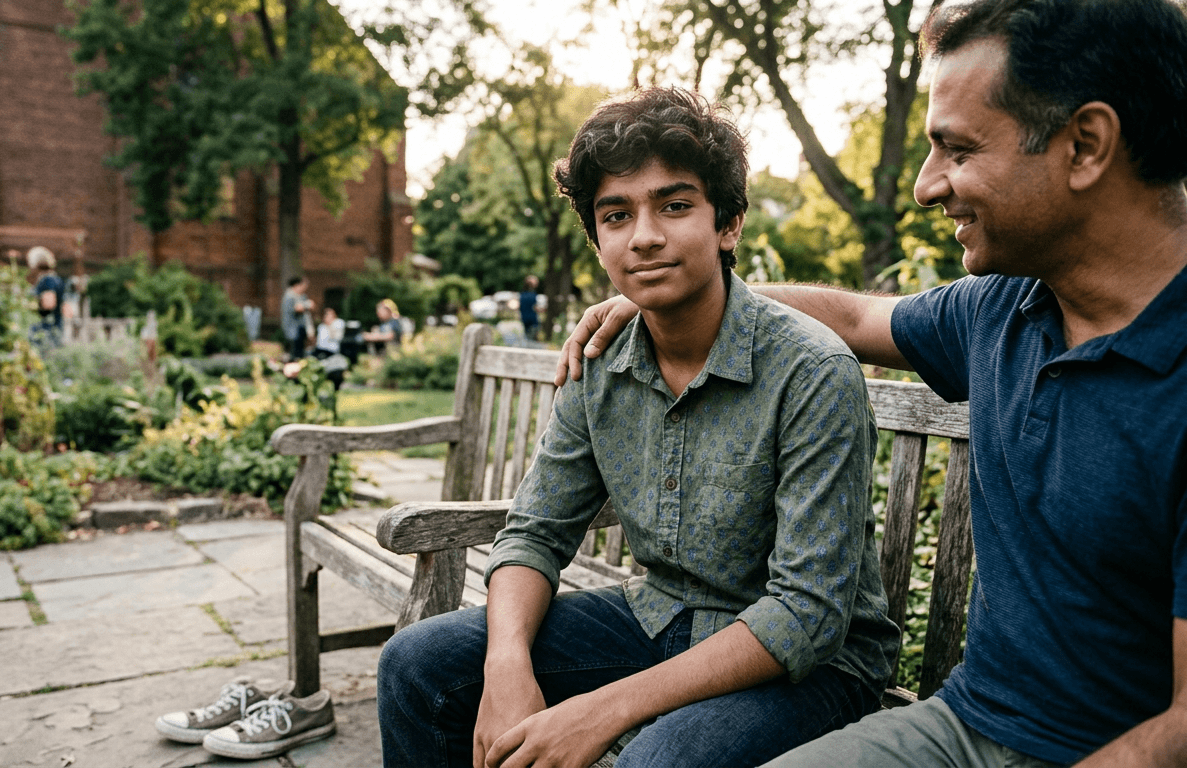
Decades of research on what makes children resilient keeps pointing to one factor above all others. According to the Harvard Center on the Developing Child, the most common thread among kids who develop resilience is at least one stable, committed relationship with a supportive adult. Not a perfect parent. Not a stress-free home. One reliable, caring adult who shows up.
That is both humbling and freeing for parents. You do not need to engineer the perfect childhood or protect your teen from every difficulty. You need to be the steady, reliable presence they can count on, the secure base they can return to when the world knocks them down. That relationship is the foundation everything else is built on.
The data backs this up at scale. The CDC has found that teens who feel connected, to family, to caring adults, and to their school, have substantially lower rates of poor mental health and risky behavior. Connection is protective. A teen who knows, deep down, that they are loved and not alone can absorb a lot of hardship. A teen who feels isolated is far more vulnerable to being overwhelmed by it. In a world where the CDC’s 2023 survey found nearly 40 percent of high school students experiencing persistent sadness, that sense of connection is not a nice-to-have. It is a genuine protective factor.
Resilience grows out of everyday interactions more than big dramatic moments. Here is where to put your energy.
The modern twist on all of this is the digital environment. Part of raising a resilient teen now means helping them cope with a world that is always on and always comparing. That means teaching them to step back from the scroll, to question the highlight reels, to take breaks, and to find steadiness offline. It also means modeling it. A parent glued to their own phone, rattled by every notification, teaches a different lesson than their words do.
It also means not treating every discomfort as an emergency. Teens who are taught that any hard feeling is intolerable and must be immediately fixed, soothed, or avoided do not learn to sit with discomfort and let it pass. Some of resilience is simply the lived knowledge that you can feel bad for a while and survive it, that feelings are weather, not climate.
Raising a resilient teen is a long game with few instant rewards. You will not always see the muscle being built. It shows up later, in the young adult who handles a setback with steadiness, who reaches out when they need help, who knows they can struggle and recover. The work you do now, being present, letting them struggle, coaching rather than rescuing, protecting connection, is an investment that pays off for the rest of their life.
You cannot make the world less anxious for your teenager. What you can do is help them become someone who can meet that world and not be broken by it. That is not about toughening them up or shielding them from everything. It is about walking beside them through hard things often enough that they learn, in their bones, that they can get through hard things. In an anxious world, that belief may be the most valuable thing you ever give them.
What does resilience in teenagers actually mean?
Resilience is the ability to face stress and setbacks, struggle, and recover, rather than being permanently overwhelmed. It does not mean never feeling stress or hiding emotions. A resilient teen feels hard things but has the capacity and support to cope and bounce back.
Can resilience be taught, or are some kids just born with it?
Resilience is built, not fixed at birth. Research shows it develops through facing manageable challenges with support, and parents have a large influence on that process. It grows like a muscle, through use and recovery, not through being protected from all difficulty.
What is the most important factor in raising a resilient teen?
According to various researches, the strongest common factor among resilient kids is at least one stable, supportive relationship with a committed adult. Being that reliable, caring presence matters more than creating a perfect or stress-free environment.
Should I protect my teen from stress and failure?
Not entirely. Shielding teens from all struggle removes the chances they need to build coping skills. The healthier approach is to let them face manageable challenges and setbacks while you provide support and guidance. Struggle with support builds strength, while constant rescue leaves teens unprepared.
How do I help my teen cope with an anxious, always-on world?
Teach and model healthy limits with screens, help them question the comparison-driven highlight reels online, and show them it is possible to feel discomfort and let it pass rather than treating every hard feeling as an emergency. Protecting connection, sleep, and offline sources of meaning all build resilience.
My teen falls apart over small setbacks. What can I do?
Focus on coaching rather than fixing, validate feelings without amplifying them, and gradually let them handle manageable challenges on their own. Praise effort over outcomes and talk openly about failure as part of learning. Over time, small successes build the confidence that they can cope.