
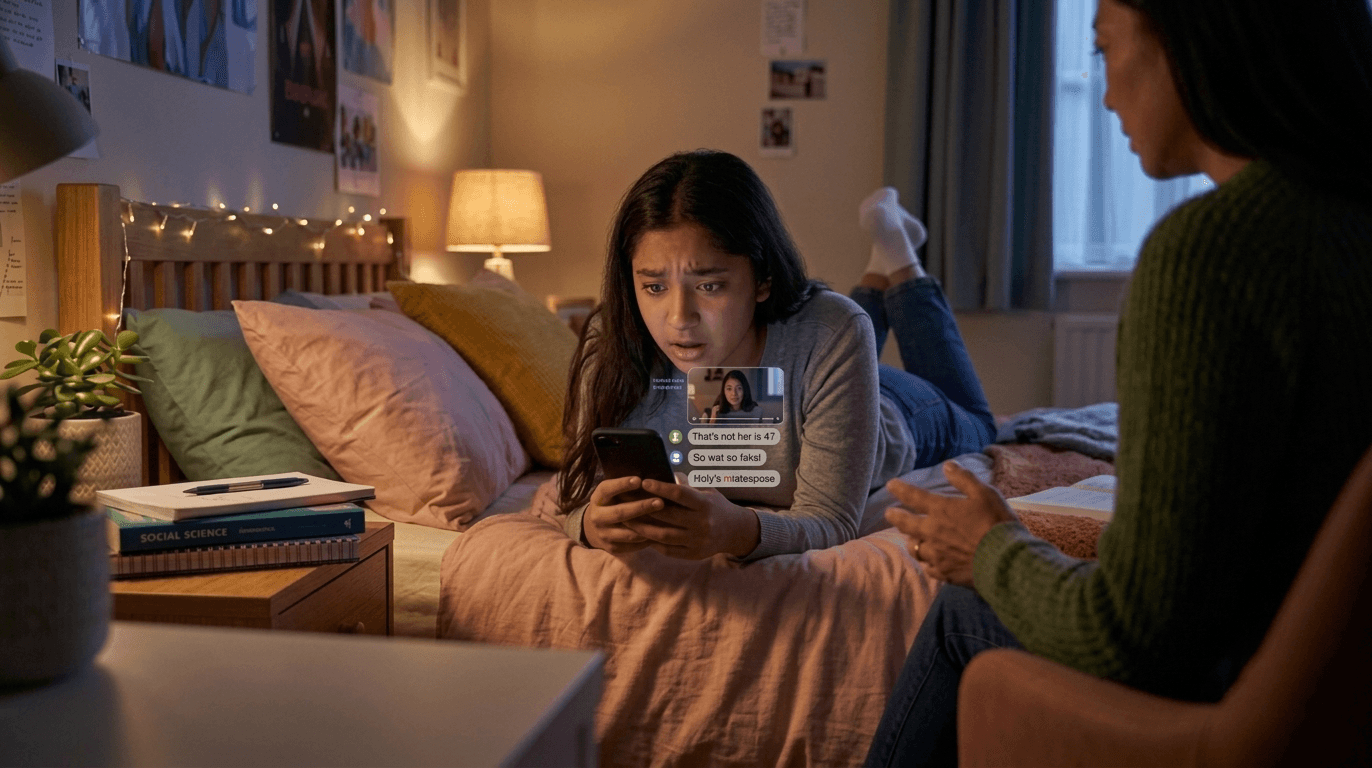
AI deepfake bullying has moved from a distant, celebrity-only problem into ordinary middle and high schools. In plain terms, it means using artificial intelligence to create fake images or videos that look like a real person, then using them to humiliate, threaten, or harass. When the target is a teenager, the damage is immediate and personal, even though nothing in the image ever actually happened. For parents, understanding how this works, and knowing exactly what to do if it happens, is now part of keeping a kid safe online.
This guide walks through what AI deepfake bullying looks like, why it spreads so easily, the warning signs a teen has been targeted, and a clear, step-by-step response. It also covers the part that gets overlooked in most coverage: helping a teen recover emotionally afterward.
A deepfake is media that has been digitally altered or generated so convincingly that it appears authentic. Cheap, widely available apps can now take a single ordinary photo, often pulled straight from a teen's social media, and produce a fake image that looks real. In a school setting, this most often shows up in a few forms: fabricated explicit or nude images of a classmate, face-swapped videos designed to embarrass, or manipulated screenshots invented to make someone appear to say or do something they never did.
The technology is not the point for a parent. The impact is. To a teen and their peers, a fake image can feel every bit as humiliating and damaging as a real one, and it can spread across group chats in minutes.
Traditional rumors need retelling. A deepfake needs one tap to forward. A few forces make AI cyberbullying especially hard to contain:
●Low effort, high harm. Creating a convincing fake now takes minutes and no technical skill, which lowers the barrier for impulsive cruelty.
● It looks real. Because the image is believable, viewers assume it is genuine, and the target is forced to prove a negative.
● It travels in private. Much of it moves through direct messages and group chats that adults never see, so it can circulate widely before anyone in charge finds out.
● Shame keeps it hidden. Targeted teens often stay silent out of embarrassment, which gives the material more time to spread.
Because so many teens hide this, parents often have to read behavior rather than wait for a confession. Any sudden, unexplained shift is worth a gentle check-in. Common signs include:
None of these confirms deepfake bullying on its own. Together, and paired with any hint that something happened online, they are a reason to open a calm, direct conversation.
If your teen tells you, or you discover, that a deepfake exists, the first job is to stay calm. A teen who came forward is watching to see whether telling you made things better or worse. Lead with, I am glad you told me, this is not your fault, and we will handle it together. Then work in this order.
The instinct is to make it disappear. Resist that for a moment. Take screenshots, save links, and note usernames, dates, and where it appeared. This evidence is what schools and police need to act. Save it, then move on to removal.
Every major platform bans fake explicit images and impersonation. Use the in-app reporting tools to flag the content and request removal. For explicit images of a minor, dedicated takedown services exist specifically to help remove them; a quick search for reputable takedown resources for minors will surface them.
If other students are involved, the school has a role. Report it in writing to a counselor or administrator, attach your evidence, and ask what their policy covers. Many districts now treat AI-generated harassment under their bullying and harassment rules.
Fabricated explicit images of a minor can be a crime. If the content is sexual in nature, threatening, or being used for extortion, file a report with local police and keep the report number. A growing number of states have laws addressing exactly this.
Removing the image is only half the work. The harder half is the emotional aftermath, and it is where most guidance goes quiet. A targeted teen commonly feels violated, powerless, and convinced that everyone believes the fake. A parent can help by naming the truth plainly: the image is fake, the shame belongs to the person who made it, and this does not define them. Keep normal routines going, watch for lasting anxiety or withdrawal, and do not hesitate to bring in a counselor or therapist if the distress lingers. Creative outlets, trusted friends, and simply feeling believed at home all support a teen in getting their footing back.
Prevention has limits worth being honest about. Tightening privacy settings and limiting public photos reduces raw material, and those steps are worth taking. But no setting fully prevents someone from misusing a single shared picture, so the most durable protection is a teen who knows they can come to you without being blamed.
This article is for informational purposes only and is not a substitute for professional medical or mental-health advice. Voices Under One Sun is a peer-support and self-expression community, not a treatment provider.
What do I do if someone made a fake AI image of my child?
First, stay calm and reassure your teen it is not their fault. Then save the evidence with screenshots, report the content to the platform for removal, notify the school if classmates are involved, and contact police if the image is sexual, threatening, or used for extortion. Consider a takedown service built for removing explicit images of minors.
Is making a deepfake of a minor illegal?
In many US states, yes, especially when the image is sexual in nature. A growing number of laws now specifically address AI-generated explicit images of minors, and existing harassment and child-protection laws may also apply. Reporting to local police creates an official record even where the law is still catching up.
How can I tell if my teen is being cyberbullied with AI?
Watch for sudden changes: a drop in mood after phone use, avoiding school or friends, secrecy or panic about their devices, or deleting accounts. Teens often hide deepfake bullying out of shame, so behavior shifts are frequently the first clue rather than a direct admission.
How do I get a deepfake image taken down?
Report it directly through the platform's tools for fake or non-consensual explicit content, which every major service prohibits. For explicit images of someone under 18, use a reputable takedown service designed for minors. Save all evidence before you request removal, since you may need it for the school or police.
My teen is embarrassed and does not want to report it. What should I do?
Acknowledge the fear, then explain that reporting is how the images get removed and how the person responsible is stopped from doing it again. Reassure them the shame belongs to the creator, not to them. If embarrassment is severe or persistent, a counselor can help them process it and reduce the sense of being exposed.
How do I protect my teen from AI deepfake bullying in the first place?
Set social accounts to private, limit publicly visible photos, and talk openly about how these fakes are made so it is less shocking if it happens. Just as important, make it clear your teen can come to you without being blamed. No privacy setting is foolproof, so trust at home is the strongest safeguard.